Third-Party Verification
Independent evaluation of a project and the measures it proposes for neighbouring communities.
Addressing communities’ key concerns through independent assessment and a thorough verification process for data center projects.
Why communities push back: opposition begins with questions that nobody can independently verify.
46+
AI data center projects blocked, withdrawn or stalled
20
US states affected
$170B+
In announced project investment
Figures cited in the supplied CAP brochure for January 2024–May 2026. Announced investment does not mean investment already spent or lost.
Synopsis
The IDCA Community Assurance Program (CAP) independently assesses and validates a data center project’s responsible community measures, helping owners and operators earn the respect and trust of host communities.
CAP considers the questions raised by residents, regulators and local leaders, scores key community KPIs, and connects plain-language developer commitments to audited limits and re-verification over the facility’s life.
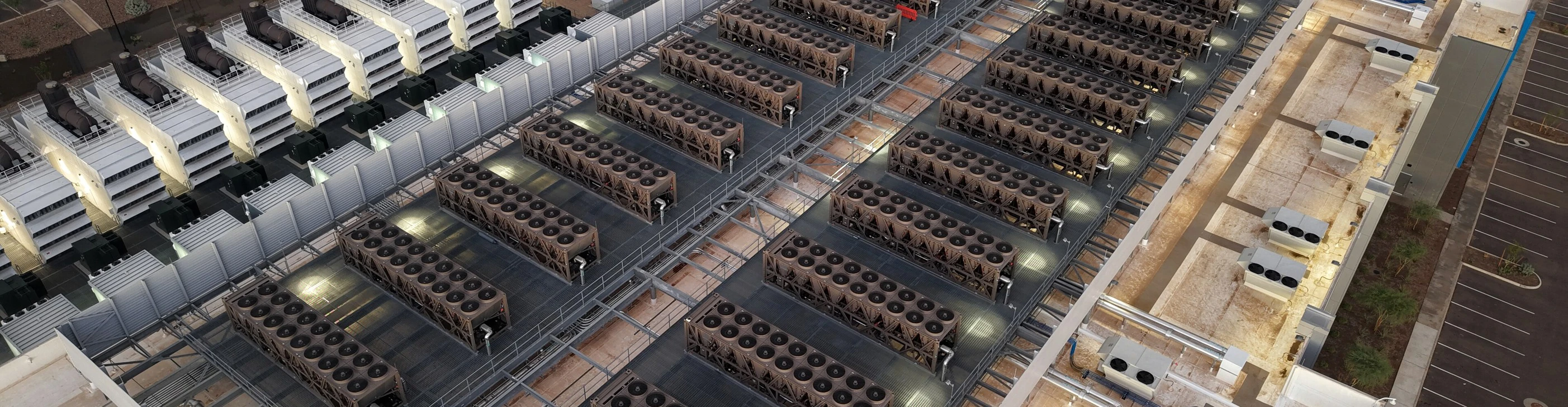
Independent verification can make community impact and developer commitments easier to examine.
CAP Key Aspects
The programme turns community-facing claims into information that can be reviewed, measured and discussed.
Independent evaluation of a project and the measures it proposes for neighbouring communities.
Assessment of environmental, economic, social and regulatory concerns throughout a project’s lifecycle.
A one-time Responsible Community-Member Score and continuing Community Trust Score informed by host feedback.
Audited limits, project verification and ongoing engagement with the communities hosting facilities.
What CAP Assesses
CAP examines issues surrounding a new data center and the actions developers may take to improve local conditions. Select a category to explore the areas covered in the brochure.
Effects of a proposed data center on the quality of water available to the community.
Potential pressure on power availability for vital community needs, including additional generation, transmission and local tariffs.
Noise generated by on-site power turbines, chillers, generators and other equipment.
Potential adverse effects of a data center development on local air quality.
Other environmental concerns, including debris and the project’s carbon footprint.
Potential community risks from harmful debris, fuel fires or electromagnetic radiation.
Security risks to communities in close proximity to a data center.
The effect of the data center on employment throughout its lifecycle.
How the site’s physical appearance affects the surrounding community.
The development’s potential impact on household and community costs throughout its lifecycle.
The data center’s eventual size and the amount of land it is expected to occupy.
Community concerns about a project’s contribution to ungoverned and unregulated AI.
Design measures intended to provide carbon offsets and limit the use of diesel generators.
Cooling strategies intended to reduce and limit water use.
Local taxes that may support roads, schools, hospitals and other public infrastructure.
Direct and indirect jobs, including local and non-local employment throughout the project’s lifetime.
The scale and value of construction contracts expected to be awarded.
Direct investments in the community by the data center owner or operator.
Additional local investment projected to result from the data center’s presence.
Measurable contributions to scientific research and innovation.
Skills-development programmes associated with the facility and made available by its operator.
Measures that may improve safety and security at the facility and in surrounding areas.
Improved local fibre and internet connectivity, potentially at lower cost.
Potential improvement in digital services supporting healthcare, finance, education and more.
Enhancements such as a stronger grid, roads, emergency services, heat reuse or additional renewables.
Developer commitments to strengthening the communities hosting its data centers.
A commitment to AI that respects human rights and supports the community’s social fabric.
These are the assessment areas and positive measures described in the supplied seven-page IDCA CAP brochure. Actual scores and findings depend on the project under review.
Earn the Trust
CAP distinguishes a one-time assessment of responsible community measures from trust developed as the project proceeds.
One-time scoring & certification
1–100 scale
CAP scores responsible community measures against key KPIs to provide a simplified indicator for community stakeholders.
Continuing community feedback
Ongoing
CTS develops through reviews and feedback as developers progress with their projects and remain engaged with host communities.
Additional reporting: The brochure’s “Earn the Trust” graphic also references the associated data center Grade Level and a total community score of 1–100%. It does not specify a calculation method or how these measures combine.
CAP — A Two-Way Program
The programme supports two situations depending on how far a data center project has progressed.
To the Community
For a probable project underway, IDCA can evaluate the development, independently certify it and engage with the local community on behalf of the developer.
To the Developer
IDCA can conduct an independent site-selection exercise, assess the location’s characteristics and engage with the community to provide a more realistic site-development outlook.
From “just trust us” to “please check us.”
Ultimate Community Takeaways
CAP helps frame the local consequences of development, the benefits it may deliver and the alternatives a community may consider.
01 / Households
Will the project raise or lower electricity, water and internet costs?
02 / Services
Will it improve digital services, internet speeds, grid stability, the environment or local resilience?
03 / Property
What impact could development have on the value of neighbouring land?
04 / Employment
What jobs will genuinely be created, and which may be displaced?
Data Center Questions
Is the facility serving AI, cloud or critical applications such as healthcare and financial services? How do its initial and potential future sizes align with local utilities and environmental limits?
What Is the Alternative?
If the development is not built, what alternative investments could the community attract, and how do their payback, risks and benefits compare?
Macro Questions
The brochure invites communities to consider the wider consequences if a proposed data center is not built locally.
Will AI development proceed elsewhere? What could be the effect on national sovereignty, national security, investments and employment if a project is developed in another location?
CAP is intended to make these broader trade-offs part of a more informed local conversation rather than assume every development is right for every community.
Next Steps
The brochure outlines a five-stage sequence from first engagement to verified reporting and community dialogue.
01
Initiate the Community Assurance Program engagement.
02
Undergo an independent project assessment.
03
Receive the results of the verification process.
04
Publish RCMS and CTS, supported by official IDCA reports, when appropriate.
05
Continue the conversation with the host community alongside IDCA.
Benefits & Honest Findings
CAP provides a shared basis for reviewing the real benefits and limits of data center projects.
01 / Communities
Replace claims that residents cannot verify with findings, data points and simplified scores, while allowing community feedback and review.
02 / Developers & Investors
Understand the true effects of a development on its host community, address risks of late-stage delays or cancellation and establish a durable public record.
03 / Authorities & Regulators
Provide a consistent basis for permitting conditions and community benefit agreements while considering the quality of investments brought into the area.
Download CAP Brochure
Frequently Asked Questions
Understanding IDCA CAP.
What is the Community Assurance Program?
CAP is an IDCA programme that independently assesses and validates a data center project’s responsible community measures against relevant community KPIs.
What do RCMS and CTS measure?
Which local issues does CAP consider?
Can a developer engage IDCA before selecting a site?
What are the steps toward CAP certification?
Does certification guarantee approval or prevent opposition?
Unveiling Our Strategic Priorities and Leadership Initiatives
Ready?
IDCA is here to assist you get started
Get in touch
Fill out and Continue